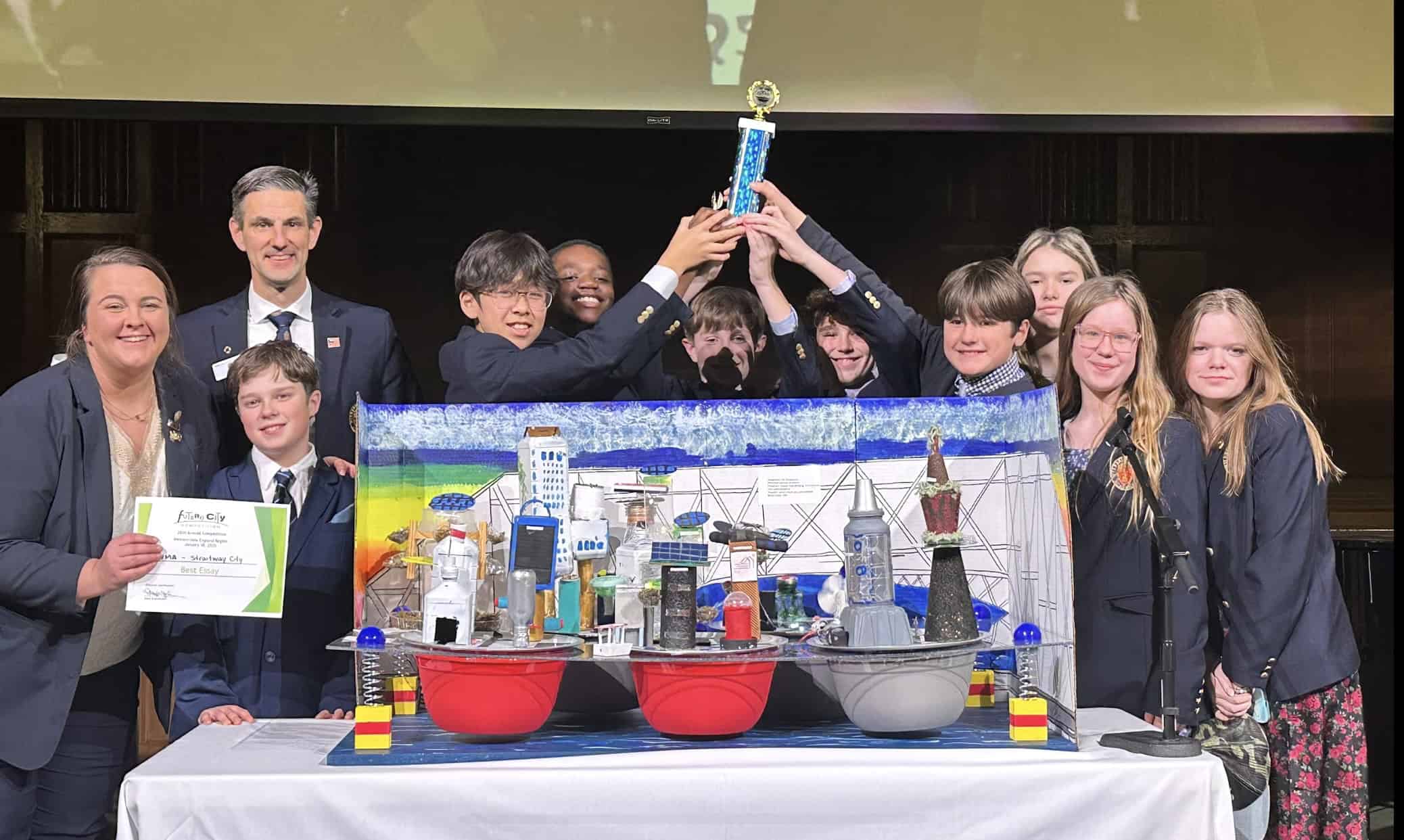
Who can Participate?
Students, Educators, and Mentors
More than 60,000 students annually in the US, Canada, China, and Nigeria.
Future City has something for Educators, Students, and Mentors—working as a team.
Team Formats
Teams must have a minimum of 3 students to participate. No maximum team size.
Official Team
Includes three student representatives, one educator, and one mentor. Most regions welcome teams larger than three students: however, only the three official student representatives present the team and answer questions at the competition.
Multiple Teams
An organization can form multiple teams under one educator account. Check with your Regional Coordinator to see how many teams may compete in the Regional Competition.
Other Team Formats
Some classrooms or clubs choose to work in one large team and break the work into smaller groups.
For Students
Future City is open to kids in grades 6, 7, and 8 who are from the same school, a home school environment or are members of a nationally, regionally, or state-recognized youth-focused organization, such as the Boy and Girl Scouts, Boys and Girls Clubs, or 4-H.
Not sure if your organization qualifies?
Contact futurecity@discovere.org
Program Leaders
Program leaders are called Educators and guide the team members through this project-based learning experience, helping them tackle a relevant citywide sustainability issue as they imagine, research, brainstorm, design, and build cities of the future.
The work is entirely student-led, but the program leader keeps the team on track, uploads deliverables, and offers feedback and guidance
Time Commitment
About 35-45 hours throughout
September – February
Who can be a program leader?
Teachers. Educators, Homeschool leaders, Community/Youth/ Church Leaders, afterschool program leaders, members of a nationally, regionally, or state-recognized youth-focused organization, such as the Boy and Girl Scouts, Boys and Girls Clubs, or 4-H, STEM professionals, parents and more!

Mentors
Mentors work alongside the Educator and act as a coach and role model, share real-life STEM experiences, offer technical guidance, and help translate academic concepts to the real world of engineering and city design.
Time Commitment
About 15-25 hours throughout
September – February
Who can be a mentor?
Engineers, technicians, urban planners, Project managers, architects, undergrad or graduate students studying a related field
Judges